
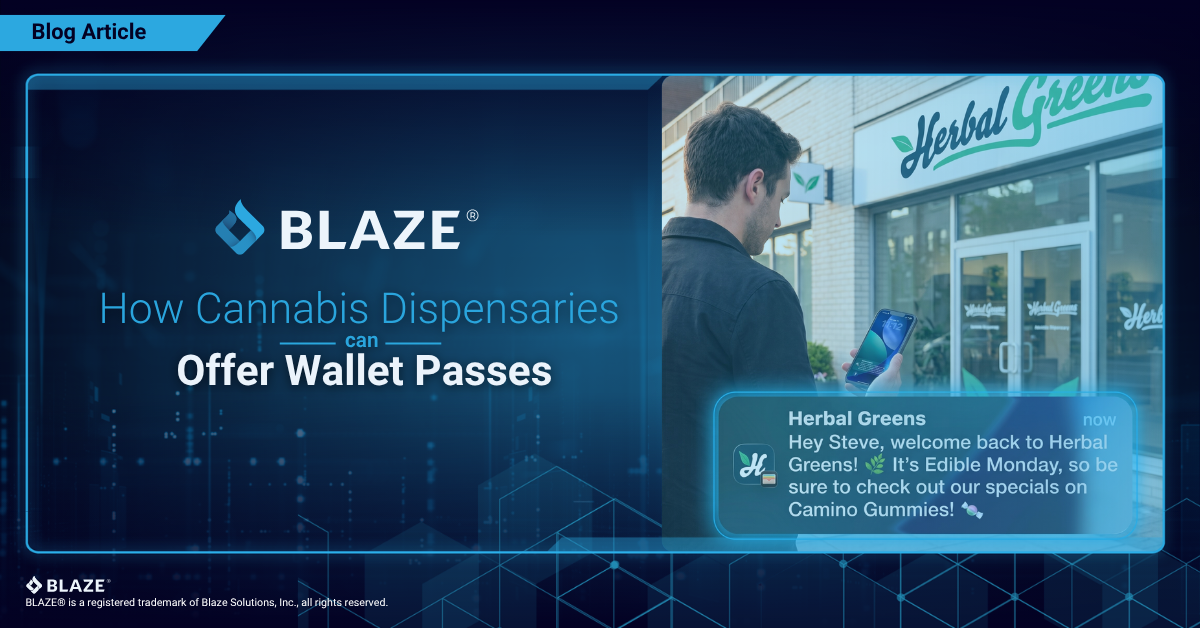
Cannabis dispensaries can replace paper loyalty cards with digital wallet passes. These live right in a customer's Apple Wallet or Google Wallet, so no app download is required. The passes update through the phone's native operating system instead of SMS. As a result, they sidestep the carrier restrictions and TCPA/10DLC rules that limit cannabis text marketing. They also outperform email and SMS on deliverability and click-through rate. BLAZE Growth is the marketing suite behind both Wallet Passes and Loyalty. It lets dispensaries configure tiers, point multipliers, and proximity-based alerts. Everything then surfaces on a card customers already saved to their phone.
Walk into most dispensaries today, and you'll still find a stack of hole-punched paper loyalty cards by the register. Some hand out a plastic keytag instead, and customers tend to lose those within a month. Meanwhile, every customer's phone already has a secure, always-on place to store this kind of card. That place is Apple Wallet or Google Wallet. Digital wallet passes let dispensaries move their entire loyalty and rewards experience onto that screen. No one needs to download a new app.
This industry faces unusually tight restrictions on how it can market to customers. Because of that, this shift isn't just a convenience upgrade. It's quickly becoming one of the few high-engagement channels cannabis retailers can use without triggering carrier blocks or compliance issues.
What Are Digital Wallet Passes, Exactly?
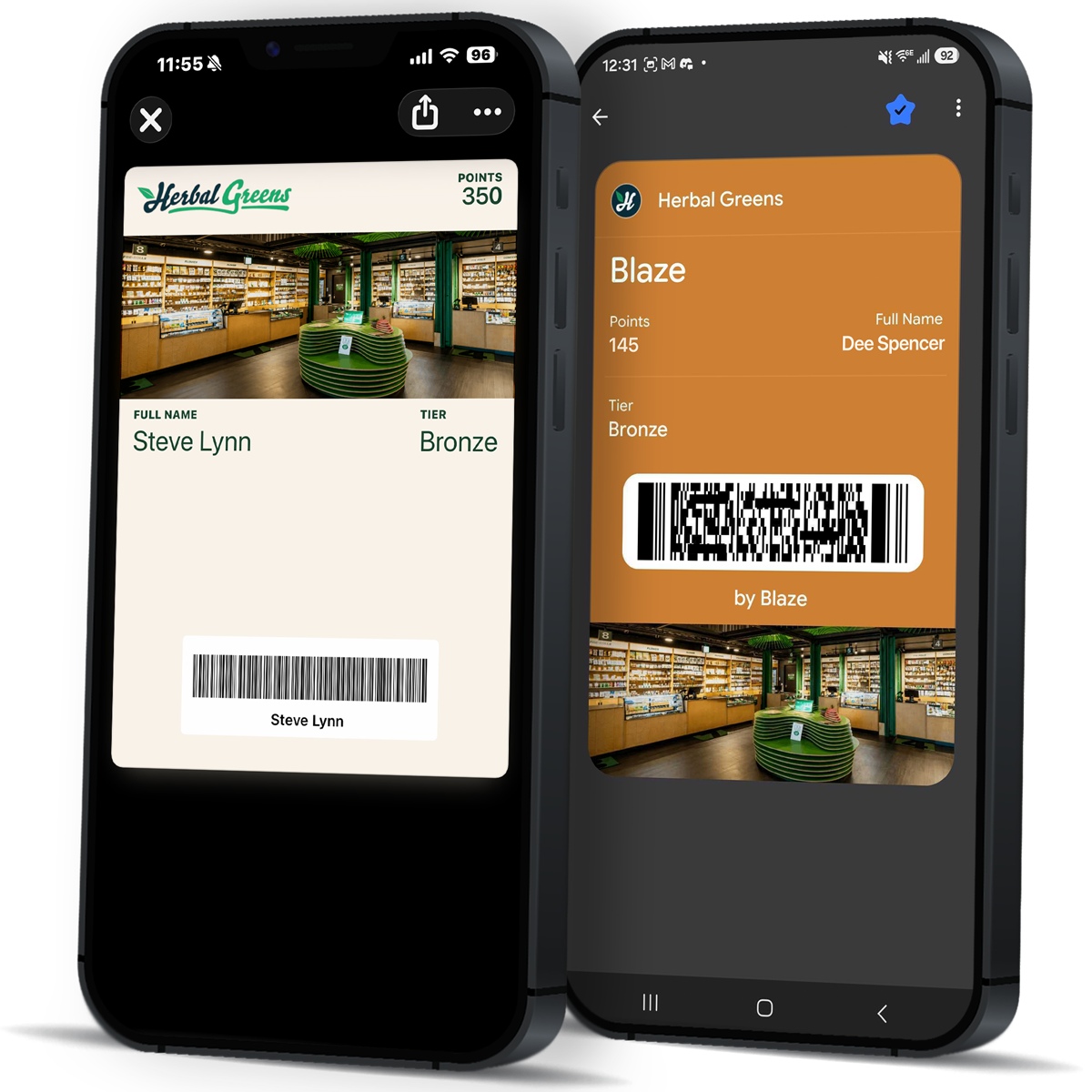
Apple Wallet (built on Apple's PassKit framework) and Google Wallet are native card-storage apps. Both ship on every iPhone and Android device. Both also support "passes" — digital cards for boarding passes, event tickets, gift cards, and loyalty programs. These passes live on the lock screen and update in real time. They can also trigger location-based notifications when a customer walks near a physical store.
Unlike a branded mobile app, a wallet pass requires no download, no account creation, and no App Store approval. A customer taps "Add to Apple Wallet" or "Save to Google Wallet" just once. They usually do this from a QR code at checkout, or from a link in a text or email. After that, the card is theirs permanently. The dispensary's point-of-sale system can then push updates to that card instantly. New point balances, tier upgrades, and limited-time offers all show up automatically.
Consumer behavior already backs this up. Vibes' 2026 consumer research looked at digital wallets and loyalty programs. It found that 48% of consumers keep four or more loyalty cards in a digital wallet. Another 43% say they'd rather manage their points balance through a wallet card than download a separate brand app. Adoption skews even higher among younger shoppers. A global survey of 11,000 consumers, reported by Retail TouchPoints, found strong mobile wallet adoption. 73% of Gen Z and 77% of Millennials say they use mobile wallets. In fact, wallet-based loyalty cards and coupons are the single most common way shoppers use their phone in-store.
Why This Matters More for Cannabis Than Almost Any Other Retail Category
Most retailers can lean on unrestricted email blasts and SMS campaigns to drive repeat visits. Cannabis retailers can't do this without significant friction. Under the federal Telephone Consumer Protection Act (TCPA), marketing texts require prior express written consent. Violations carry statutory damages of $500 to $1,500 per message. The FCC's 2025 one-to-one consent rules tightened this further. They eliminated blanket, multi-brand consent forms in favor of seller-specific written consent for each store. On top of that, major carriers classify cannabis messaging under the informal "SHAFT" content category, alongside sex, alcohol, firearms, and tobacco. As DailyStory's compliance guide for cannabis text messaging explains, this restricts dispensaries to registered 10DLC campaigns and documented age-verification flows. Dispensaries must also stick to strict, pre-approved message templates. If a message deviates from the template, carriers simply block it.
Digital wallet passes largely sidestep this problem. Push notifications sent through Apple Wallet and Google Wallet ride on the OS-level notification system, not SMS or carrier networks. As a result, dispensaries aren't subject to the same 10DLC filtering or per-message carrier risk. This is a marketing channel built directly into the phone's operating system, not a rented channel a carrier can throttle.
The performance numbers back this up. According to industry data compiled by PushPass/Fancircles, wallet pass notifications achieve near-100% deliverability and roughly 22% click-through rates. Email, by comparison, sees 86–95% deliverability and click-through rates of just 1.6–4.4%. Wallet-based engagement also correlates with bigger baskets. Per the same wallet pass statistics report from Rivo, digital wallet users spend 31% more than non-users across retail categories.
How Dispensaries Actually Roll This Out
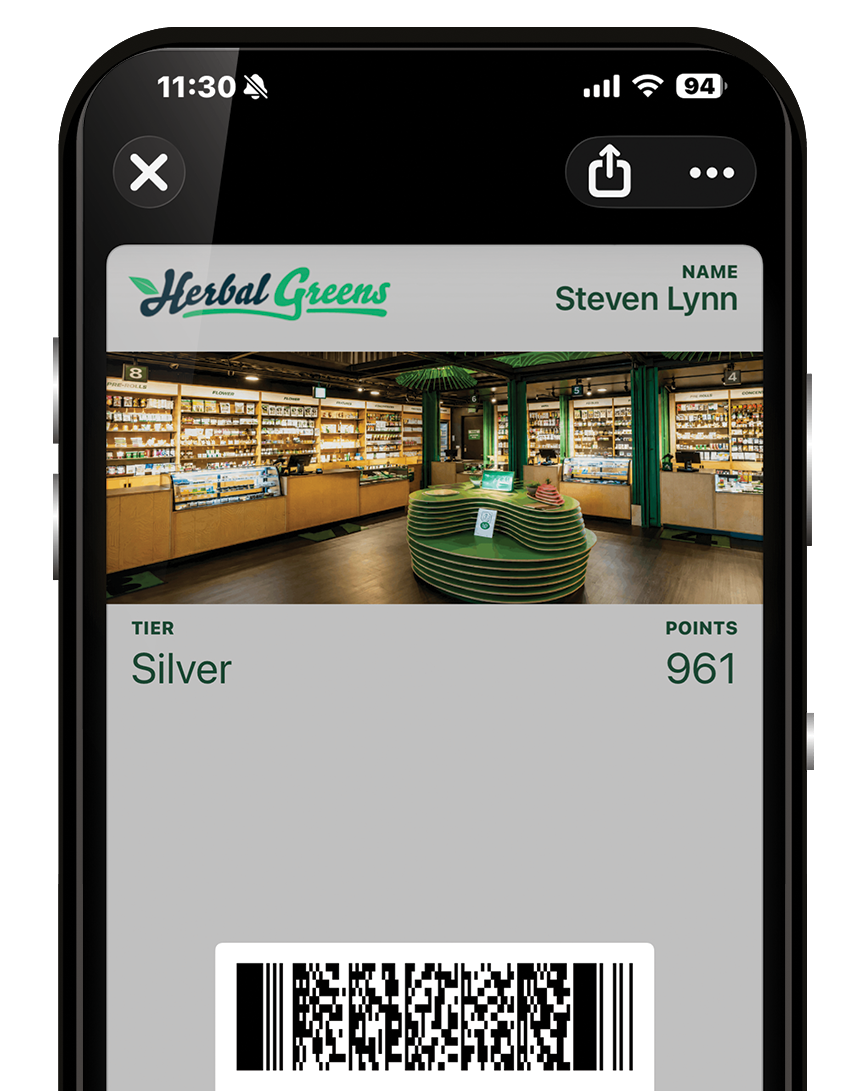
The mechanics are simpler than most dispensary operators expect, especially with a cannabis-specific retail platform handling the integration. BLAZE's Wallet Passes product is a good example of what this looks like in practice for cannabis retail specifically:
- Point balances update automatically. Every purchase recalculates the customer's rewards balance. The change reflects on their wallet card within seconds — no manual syncing, no separate app to open.
- Budtenders scan a barcode at checkout. The pass carries a scannable code. Scanning it pulls up the customer's profile and available rewards directly in the POS, keeping checkout fast during busy periods.
- Tiers get their own card designs. Dispensaries can configure multiple loyalty tiers, each with its own point multiplier. The card design updates automatically the moment a customer levels up.
- Enrollment happens wherever the customer already is. That could be an in-store QR code, a signup link at the register's customer-facing display, or an automated text or email after checkout.
- Proximity notifications reach customers passing by. Because the pass lives in the phone's native wallet, the OS can trigger a notification when a customer is near the store. No SMS is involved.
Sample Notification Copy
The actual wording matters, since lock-screen notifications only show so much before they're truncated. Here's what well-built tier-upgrade and proximity messages tend to look like in practice.
Tier upgrade notifications
| Trigger | Sample Notification Copy | Notes |
|---|---|---|
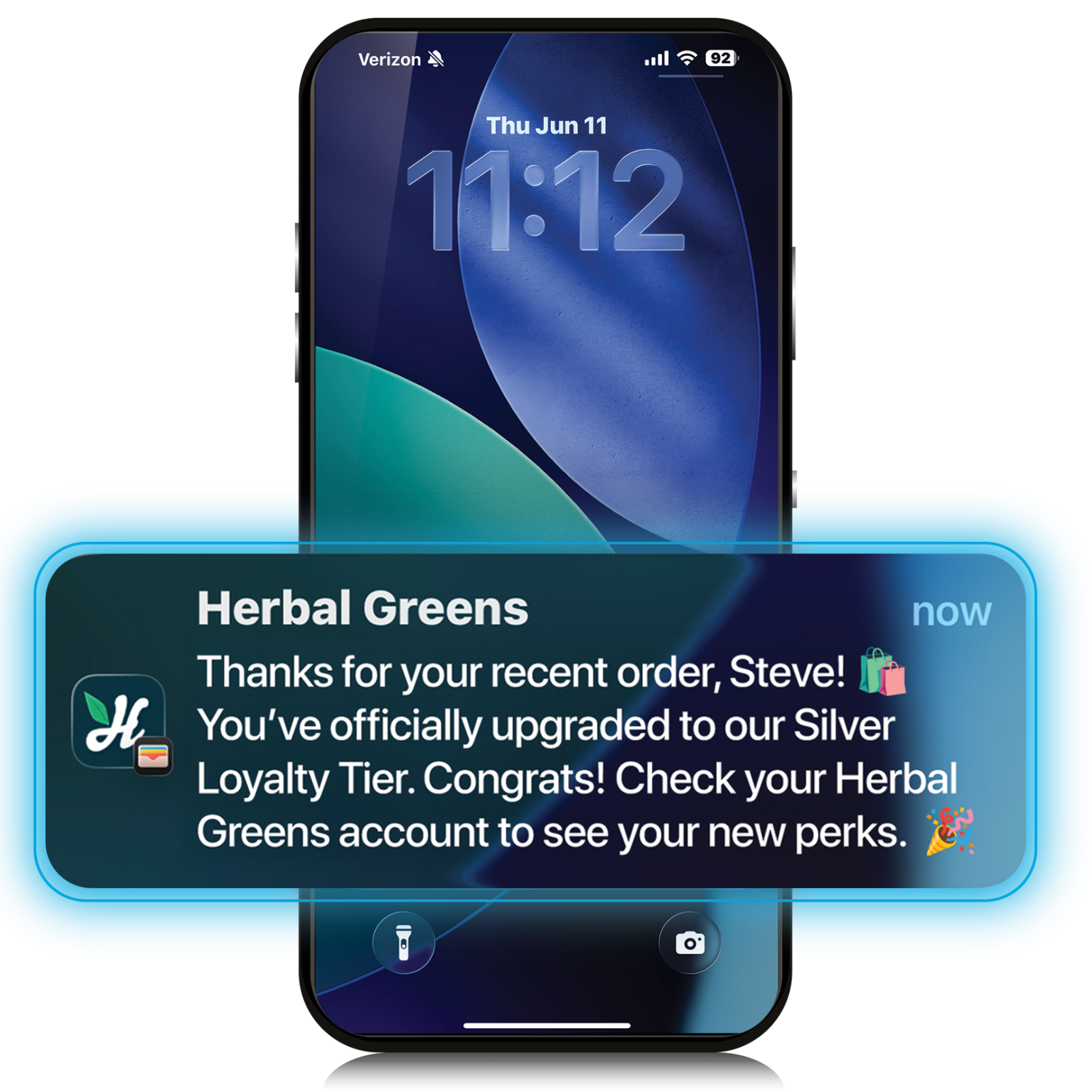
| Customer reaches Silver tier | "You're Silver now! Enjoy 1.5x points on every purchase." | Confirms the benefit immediately so the upgrade feels tangible, not abstract |
| Customer reaches Gold tier | "Welcome to Gold. 2x points + early access to drops start now." | Pairs the status change with a concrete new perk |
| Customer reaches top/VIP tier | "You've hit VIP status — your card just got an upgrade." | Ties the message to the visual card redesign so it reinforces itself |
| Customer is close to next tier | "60 points to Gold. One more visit could get you there." | Nudges a near-term return visit rather than just celebrating a past one |
| Tier about to expire/downgrade risk | "Your Gold status expires in 7 days — one purchase keeps it active." | Retention play; creates urgency without discounting |
| Anniversary of reaching a tier | "1 year as a Gold member — thanks for being with us." | Low-pressure loyalty touch that doesn't ask for a sale |
Proximity-based notifications
| Trigger | Sample Notification Copy | Notes |
|---|---|---|
| Customer within geofence radius (e.g., 500 ft) | "You're near [Dispensary Name] — tap for today's Gold-tier deals." | Keep the radius tight enough that it reads as helpful, not intrusive |
| First time near a specific location | "New here? Show this card for 10% off your first visit at this location." | Useful for multi-location operators driving trial at a new store |
| Near store during a flash promo window | "Live now: 2x points for the next 2 hours at this location." | Time-boxed urgency; works well paired with slow-traffic periods |
| Near store, unredeemed points sitting idle | "You have 340 points waiting — you're close enough to redeem them today." | Converts dormant balances into a visit |
| Near store, near closing time | "Store closes in 45 min — stop by for your saved rewards." | Useful for last-call foot traffic on slow evenings |
| Passed by without entering (dwell-based, if supported) | "Didn't make it in today? Your Gold perks are still here tomorrow." | Softer re-engagement; avoid overusing to prevent notification fatigue |
Building a Notification Strategy
Great notification copy only works as part of a broader strategy. Most dispensaries do best sending two to four wallet notifications per month. Time them around real triggers, like a tier change, a still-unredeemed balance, or a walk-by near the store. Personalization matters, too. A notification tailored to a customer's tier and purchase history earns far more attention than a generic blast. It also helps to track open and redemption rates by notification type, then retire anything that isn't converting. Because these alerts run through the phone's operating system rather than SMS, dispensaries can experiment freely. There's no carrier-approved template to touch, and no text messaging budget to burn through.
Pairing Wallet Passes With a Real Loyalty Engine
A wallet pass is only as good as the loyalty program behind it. This is where a connected system matters. As part of BLAZE Growth, BLAZE's Loyalty product lets dispensaries build the actual rewards logic. That includes point multipliers by time of day, location, or product brand. It also includes tiered structures like Bronze, Silver, Gold, and VIP. Automated "missions" reward first purchases, referrals, or online reviews. Everything then surfaces through the same wallet card customers already saved. Points sync across in-store POS, e-commerce, delivery, and kiosk channels. As a result, the balance on a customer's phone is always accurate, no matter where they last shopped.
Getting Started
Retailers considering this shift generally don't need to rebuild anything. The wallet pass layer plugs into the point-of-sale and loyalty system that's likely already running the register. That means the heaviest lift is deciding on tier structure, card branding, and enrollment prompts, not writing new software. A typical rollout looks something like this:
- Map the tier structure first. Decide how many tiers make sense. Most dispensaries land on three, something like Bronze, Silver, and Gold. Then define what earns a customer into each one, and what the multiplier or perk difference actually is.
- Design the card to match the brand. Colors, logo placement, and how the design changes at each tier all matter here. This is what customers actually see every time they unlock their phone.
- Pick enrollment touchpoints. Most operators start with an in-store QR code at the register, plus a follow-up link in the post-purchase receipt email or text. They add the customer-facing display prompt once staff are comfortable with the flow.
- Write the notification templates. Tier-upgrade and proximity messages, like the samples above, should be drafted and approved before launch. Set the geofence radius and frequency caps for proximity alerts at the same time.
- Train budtenders on the barcode scan. The checkout flow shouldn't add friction. Staff need to pull up a customer's profile from the wallet card just as quickly as they would from a physical card.
The deliverability numbers, the spending lift among wallet users, and the compliance advantages over SMS all point the same direction. Dispensaries that haven't moved loyalty into Apple Wallet and Google Wallet are leaving a low-friction, high-return channel largely untapped.
Ready to See It in Action?
The fastest way to evaluate wallet passes for your dispensary is to see them in action. A live demo shows the actual enrollment flow, card designs, and notification builder, rather than just reading about them.