
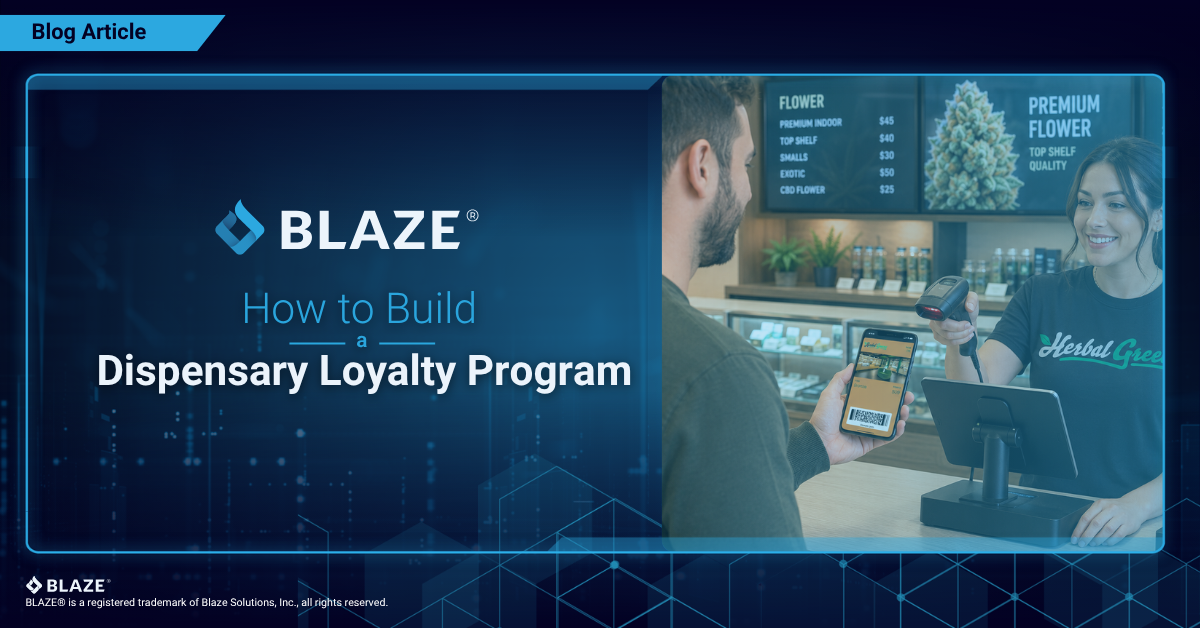
Most dispensaries already have "a loyalty program." Far fewer have a loyalty journey — a connected sequence of touchpoints that moves a first-time shopper toward becoming a repeat customer, and a repeat customer toward becoming a top-tier spender. Here's how to design one, touchpoint by touchpoint.
🕑 9 min read 📅 July 28, 2026 Cannabis Retail · Marketing & Loyalty
Key takeaways
- A real loyalty journey connects enrollment, tiers, multipliers, and missions — not just a points balance
- Self-enrollment on an interactive Customer-Facing Display (CFD) removes the biggest barrier to signup: talking to a budtender
- Wallet passes turn a loyalty account into something a customer carries with them, with real-time balance updates
- Multi-tier rewards and multipliers give customers a reason to spend more and shop during specific windows — without blanket discounts
- Automated missions reward the exact behaviors — first purchase, referrals, reviews — that drive long-term retention
- Loyalty members already drive 89% of dispensary revenue — the opportunity is getting more of them to actually engage
That distinction matters. A loyalty program that lives only at the register — a punch card, a generic "10 points per dollar" rule — asks customers to remember it exists. A loyalty journey meets customers where they already are: at the counter, on the website, in their phone's wallet, and through the door on a delivery order. It shows them where they stand, gives them a reason to come back sooner, and rewards the specific behaviors that grow basket size and visit frequency.
Self-Enrollment
Join privately at the CFD — no personal details shared out loud with staff.
Wallet Passes
A branded pass in Apple Wallet or Google Wallet, added with one QR scan.
Multi-Tier Rewards
Bronze, Silver, Gold — each tier unlocks a faster earn rate and better perks.
Multipliers
Boost point earnings by time, location, channel, member group, or brand.
Missions
Automated rewards for first purchases, referrals, reviews, and milestones.
Omnichannel Sync
Points and tier status follow the customer — in-store, online, app, kiosk, delivery.
Why doesn't "set it and forget it" loyalty work in cannabis retail?
Cannabis consumers are unusually price- and promotion-sensitive, and most markets have no shortage of dispensaries competing for the same customer. Headset's point-of-sale data shows just how little of that loyalty is anchored anywhere: the median cannabis brand retains only about 32.6% of its customers, and in high-velocity categories like flower and pre-rolls, nearly seven in ten buyers switch to a different brand on their next purchase. If shoppers won't stay loyal to a brand, they won't stay loyal to a dispensary carrying dozens of competing brands either — unless the store itself gives them a reason to. A loyalty program that only offers a flat discount does little to differentiate one store from the next, and it does nothing to change behavior — it just rewards purchases that were probably going to happen anyway.
An effective dispensary loyalty program needs to do three things a basic points system can't: lower the friction to join, so more customers actually enroll; make progress visible everywhere the customer shops, so the program stays top of mind; and reward the specific actions that drive retention — a second visit, a bigger basket, a referral — not just spend.
"The programs that actually change behavior aren't the ones with the biggest discount — they're the ones a customer can see progress in, everywhere they shop."
How does self-enrollment via the Customer-Facing Display remove friction?
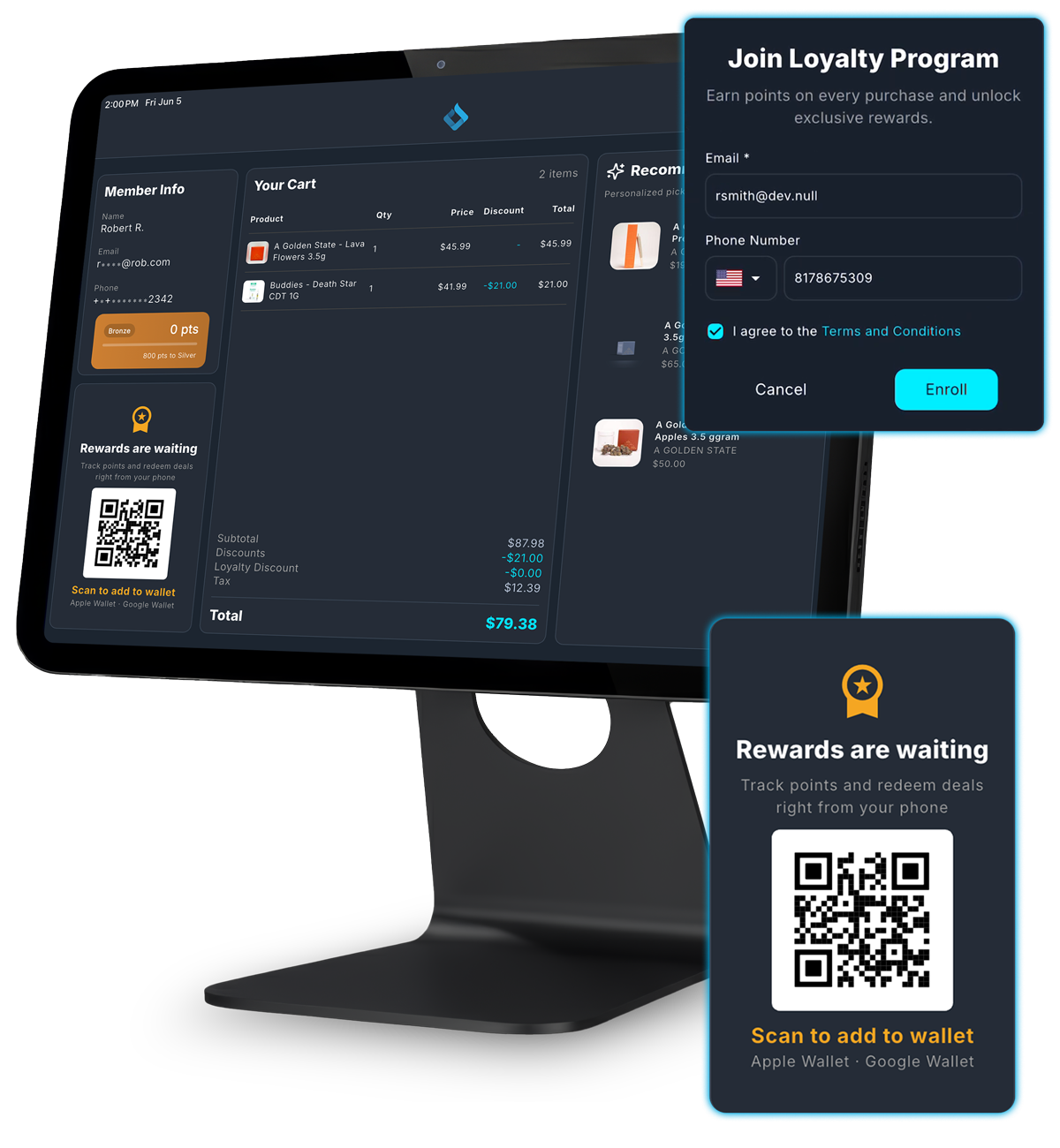
The single biggest leak in most dispensary loyalty programs is enrollment itself. Asking a budtender to collect a customer's name, phone number, and email at checkout adds friction to the transaction, and many customers simply don't want to hand over personal information verbally, in a room full of other shoppers.
The fix is self-enrollment at the point of sale. On an interactive Customer-Facing Display (CFD), the customer can join the loyalty program privately, at their own pace, without saying a word to staff. During checkout, the CFD lets a shopper enter their own details, see their points balance and tier status update in real time, and add a digital wallet pass to Apple Wallet or Google Wallet with a single QR scan — all before the transaction is even complete.
This matters for the journey because enrollment is the first touchpoint, and it sets the tone for every one that follows. A frictionless, private sign-up captures far more customers than a verbal pitch at the register, and it starts each new member off already able to see their progress — which is the first hook for a return visit.
New member — Self-enrolls privately at the CFD in under a minute, adds a wallet pass with one scan, and sees a welcome mission bonus land immediately. No staff conversation required.
Returning / VIP member — Checks in, sees their live tier status and point balance on the CFD or wallet pass, redeems rewards instantly at checkout, and gets nudged toward their next tier upgrade automatically.
What are loyalty tiers and how do they work?
Once a customer has enrolled, the next job of the journey is to make continued spending feel like it's building toward something. That's what tiered rewards do.
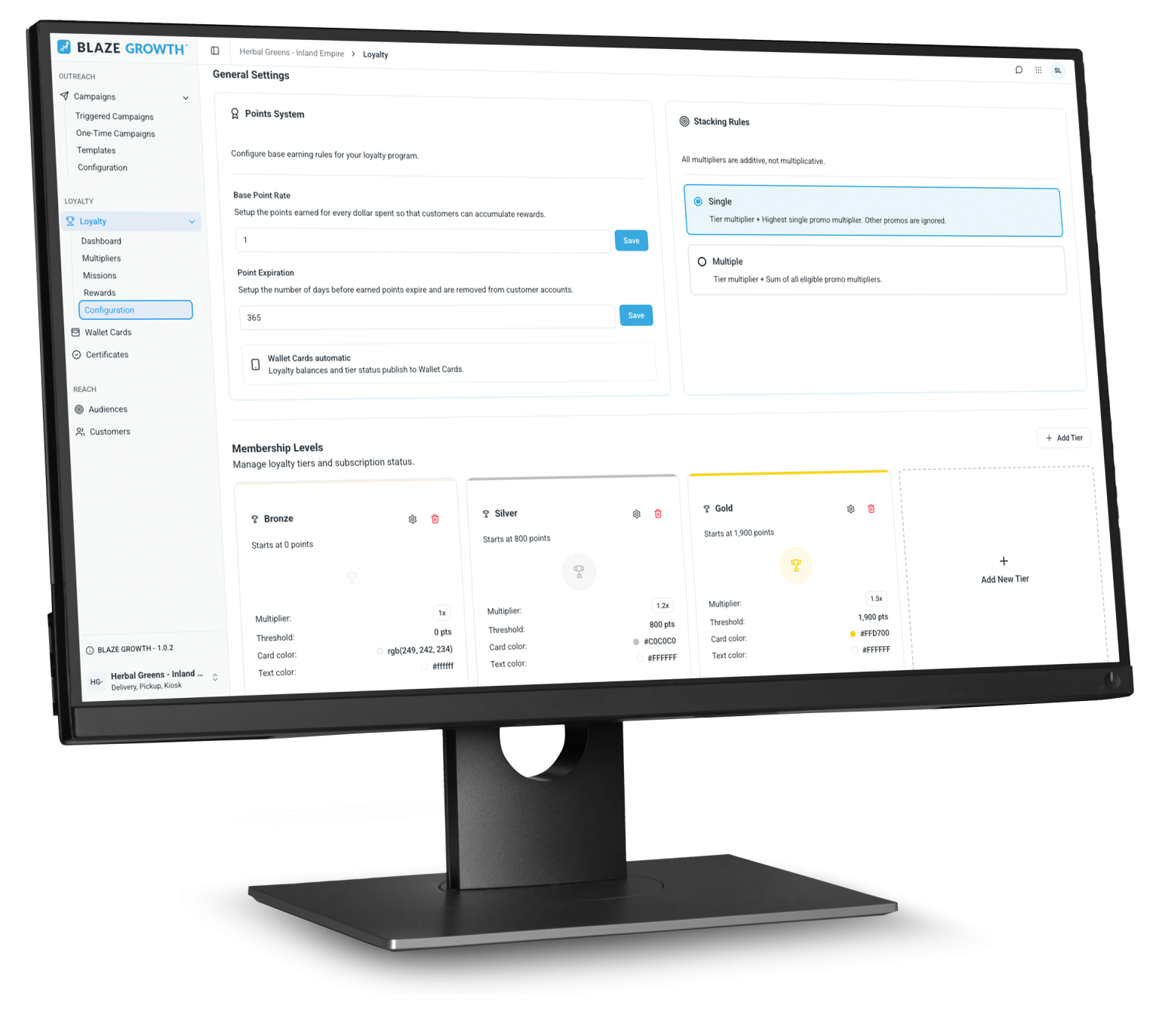
A well-structured tier system — commonly Bronze, Silver, and Gold — gives every member a clear, visible reason to increase how often and how much they buy.
🥉 Bronze — 1× Points
The entry tier every new member starts in: points on every purchase, a birthday reward, and an instant wallet card at sign-up.
🥈 Silver — 1.5× Points
50% more points on every purchase, early access to promotions and deals, and a distinct card design that visually signals status.
🥇 Gold — 2× Points
Double points on every transaction, VIP event invitations, and exclusive Gold-only offers.
The tiers themselves should be fully configurable — names, thresholds, colors, and per-tier benefits — so the program matches your brand rather than a generic template. The important design principle is that each tier needs to feel like an upgrade a customer can see and touch, not just a number in a database. That's why the tier design should carry through to the wallet pass itself, not just a back-office report.
How do multipliers shape customer behavior?
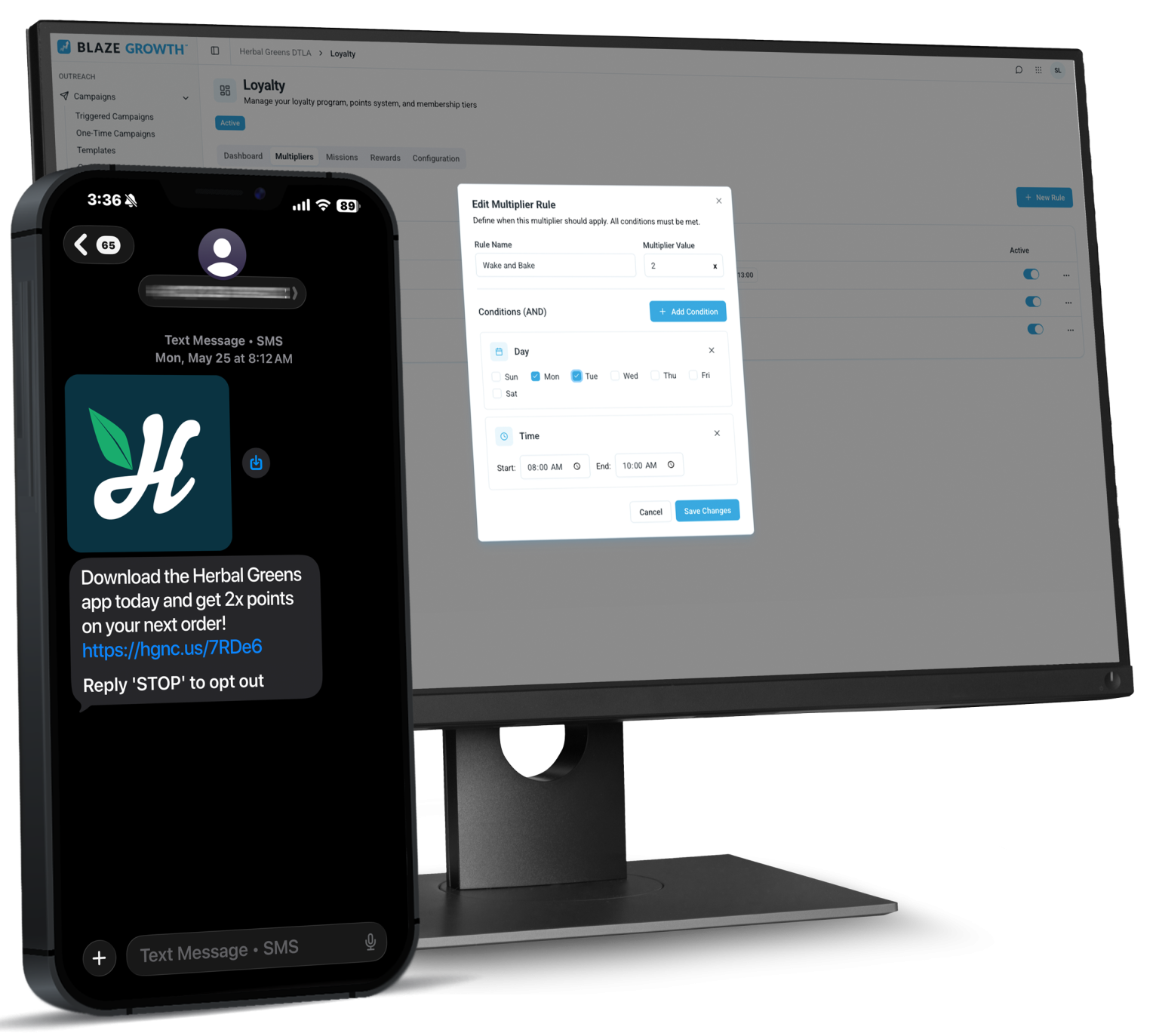
Tiers reward loyalty over time. Multipliers let you shape behavior in the moment — without resorting to blanket discounts that erode margin.
A multiplier rule temporarily boosts the rate at which a customer earns points under specific conditions:
- Time of Day / Day of Week — Run Happy Hour multipliers automatically on slow weekday afternoons
- Location-Specific — Drive foot traffic to a store that needs it
- Channel-Based — Reward online orders, kiosk purchases, or delivery differently, depending on which channel you want to grow
- Member Group Targeting — Give VIP tiers or brand-new members an extra edge to accelerate their first upgrade
- Brand Multipliers — Move specific inventory without a store-wide markdown
The advantage over a straight discount is that a multiplier only pays out when the customer takes the exact action you want — shopping at an off-peak hour, trying a new channel, buying a specific brand — rather than discounting every transaction regardless of behavior.
What are missions, and how do they automate the customer journey?
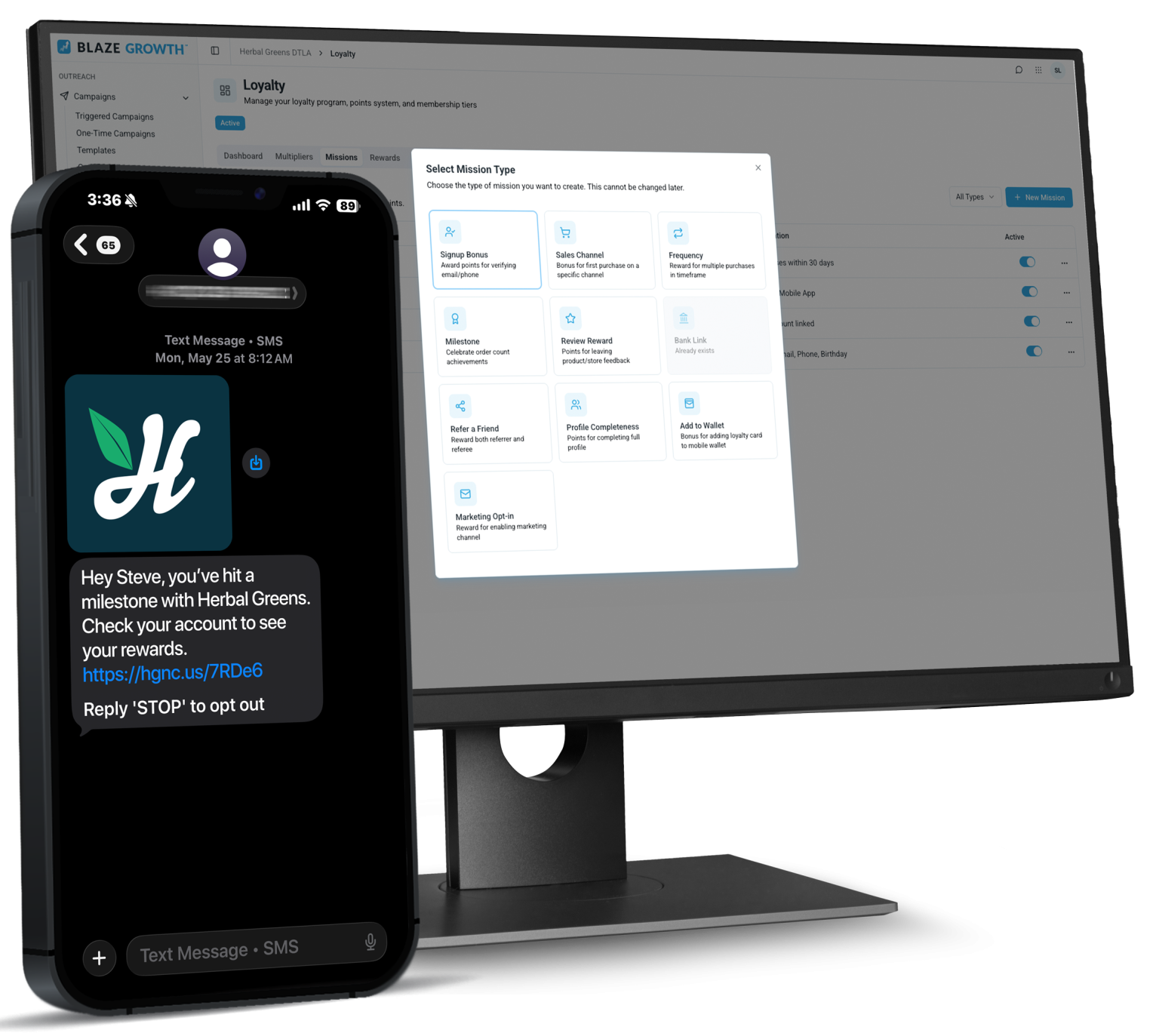
Tiers and multipliers reward what customers already do. Missions are what actively move a customer along the journey — automated, pre-built campaigns that trigger a reward the moment a customer completes a specific action.
- 🎉 First Purchase — Welcome new members with a bonus on day one
- 🔁 Visit Frequency — Reward customers who keep coming back
- ⭐ Reward Reviews — Incentivize Google or Weedmaps reviews on autopilot
- 🤝 Refer a Friend — Turn regulars into your best acquisition channel
- 🏦 Linked Bank Account — Reward wallet adoption for seamless checkout
- 🏆 Order Milestones — Celebrate loyalty at 5, 10, 25 orders and beyond
Because missions run on autopilot once activated, they effectively become the connective tissue of the customer journey: the first-purchase mission gets someone in the door, the visit-frequency mission gets them back within days instead of weeks, and the referral mission turns them into new customer acquisition without any additional ad spend.
How do you keep the loyalty experience consistent across every channel?
None of the above works if the loyalty experience breaks down the moment a customer isn't standing at your register. The journey needs to be consistent whether the customer is checking out in-store, ordering online, browsing the mobile app, using a self-service kiosk, or receiving a delivery at their door.
| Channel | What the customer sees |
|---|---|
| Register / CFD | Point balance and available rewards, right at checkout |
| E-commerce website | Balance and redemption options at online checkout |
| Mobile app | Balance, tier, and rewards visible every time the app opens |
| Self-service kiosk | Login, browse, and automatic point application — no staff involved |
| Wallet pass | Real-time balance updates in Apple Wallet or Google Wallet after every purchase |
| Delivery checkout | Points redeemed automatically as the driver processes payment at the door |
This is the real difference between a "loyalty program" and a loyalty journey: every touchpoint reflects the same profile, in real time, so the customer never has to wonder where they stand or which channel "counts."
Putting the journey together
Mapped end to end, a modern dispensary loyalty journey looks like this: a customer self-enrolls privately at the CFD during their first checkout and adds a wallet pass with one scan. A first-purchase mission fires immediately, giving them a reason to come back. A visit-frequency multiplier nudges their second visit sooner, and by their third or fourth purchase they've crossed the threshold into Silver, unlocking a higher earn rate and early access to promotions. A referral mission turns them into an advocate, and a Happy Hour multiplier keeps them shopping during off-peak hours. Every one of those interactions — in-store, online, on the app, at the kiosk, or at the door — updates the same wallet pass and the same profile, so the customer always knows exactly where they stand.
That's the shift dispensaries need to make: from a loyalty program that sits quietly in the background to a loyalty engine that actively drives the next visit, the bigger basket, and the next referral.
What's the ROI of a connected loyalty journey?
Industry-wide loyalty data gives a useful directional picture of what's at stake. For a dispensary doing $2M in annual revenue, closing the gap between "enrolled" and "engaged" members can look like this:
📊 Illustrative annual impact — $2M in revenue, industry-average lift ranges applied
| Lever | Typical industry lift | Est. annual impact |
|---|---|---|
| Higher average order value from engaged members | +12–18% | +$60,000–$90,000 |
| Increased purchase frequency from tier/mission engagement | +20–30% | +$100,000–$150,000 |
| Revenue retained by converting one-time buyers into repeat members | Members drive ~89% of revenue | Foundational — see note below |
Ranges are illustrative, based on published industry averages for loyalty-driven AOV and frequency lift; actual results vary by store, market, and current program engagement.
Building this without stitching together five tools
Most of the pieces described here — self-enrollment, tiers, multipliers, missions, and wallet passes — are typically sold as separate point solutions that dispensaries have to integrate and maintain independently. BLAZE Loyalty builds all of it natively into the same platform as the POS, e-commerce, and delivery systems, so customer data and purchase behavior live in one place instead of being synced across disconnected tools. Configuration — tier names, multiplier rules, mission triggers — happens in the BLAZE back office, with no developer required.
If you're evaluating how to build or rebuild your dispensary's loyalty journey, a good next step is seeing the full customer experience — from CFD enrollment to wallet pass to tier upgrade — configured for your own store.
See it in action
Ready to turn one-time buyers into repeat customers?
BLAZE Growth brings marketing and loyalty together in one platform — so every tier, multiplier, mission, and wallet pass described above runs natively alongside your POS, e-commerce, and delivery data, with no third-party syncing required.
Common questions
Dispensary loyalty program FAQ
What is a dispensary loyalty program?
A dispensary loyalty program is a system that rewards cannabis customers for repeat purchases and specific behaviors — such as referrals or reviews — typically through points, tiers, and redeemable rewards tracked across every channel a customer shops.
How does self-enrollment work on a Customer-Facing Display (CFD)?
Customers enroll directly on the CFD at checkout, entering their own details privately without sharing personal information with a budtender. They can see their points balance and tier status update immediately and add a wallet pass with a single QR scan.
What are loyalty tiers, and how many should a dispensary offer?
Tiers — commonly Bronze, Silver, and Gold — group members by spend or engagement level and unlock progressively better earn rates and perks. Most dispensaries run two to three tiers, though the structure is fully configurable to match the brand.
What are point multipliers?
Multipliers temporarily boost how fast a customer earns points under specific conditions — time of day, store location, sales channel, member group, or brand — letting retailers shape behavior without running a blanket discount.
Do wallet passes require the customer to download an app?
No. Wallet passes live in Apple Wallet or Google Wallet, which come standard on iPhone and Android devices. Balances update automatically after every purchase with no separate app download required.
Can loyalty points be earned and redeemed on delivery and online orders?
Yes. A connected loyalty program syncs the same customer profile across in-store, e-commerce, mobile app, kiosk, and delivery checkout, so points apply automatically no matter which channel the customer uses.
What are loyalty missions?
Missions are pre-built, automated campaigns that reward specific behaviors — a first purchase, a Google review, a referral, or a purchase milestone — without requiring ongoing manual management once activated.